
10 Workplace Trends Shaping GCCs in India in 2026
India's Global Capability Centre landscape has entered a new phase.
GCCs are no longer simply offshore centres built around cost efficiency. They are increasingly becoming strategic hubs for artificial intelligence, engineering, product development, research and development, analytics, cybersecurity, and global business operations.
India had more than 2,100 GCCs in 2026, and the country's GCC ecosystem continues to expand in both scale and strategic importance. Recent industry research shows that GCCs are expected to remain a major driver of India's office demand, with Bengaluru and Hyderabad continuing to be two of the country's most important GCC markets.
This transformation is changing what companies expect from their offices.
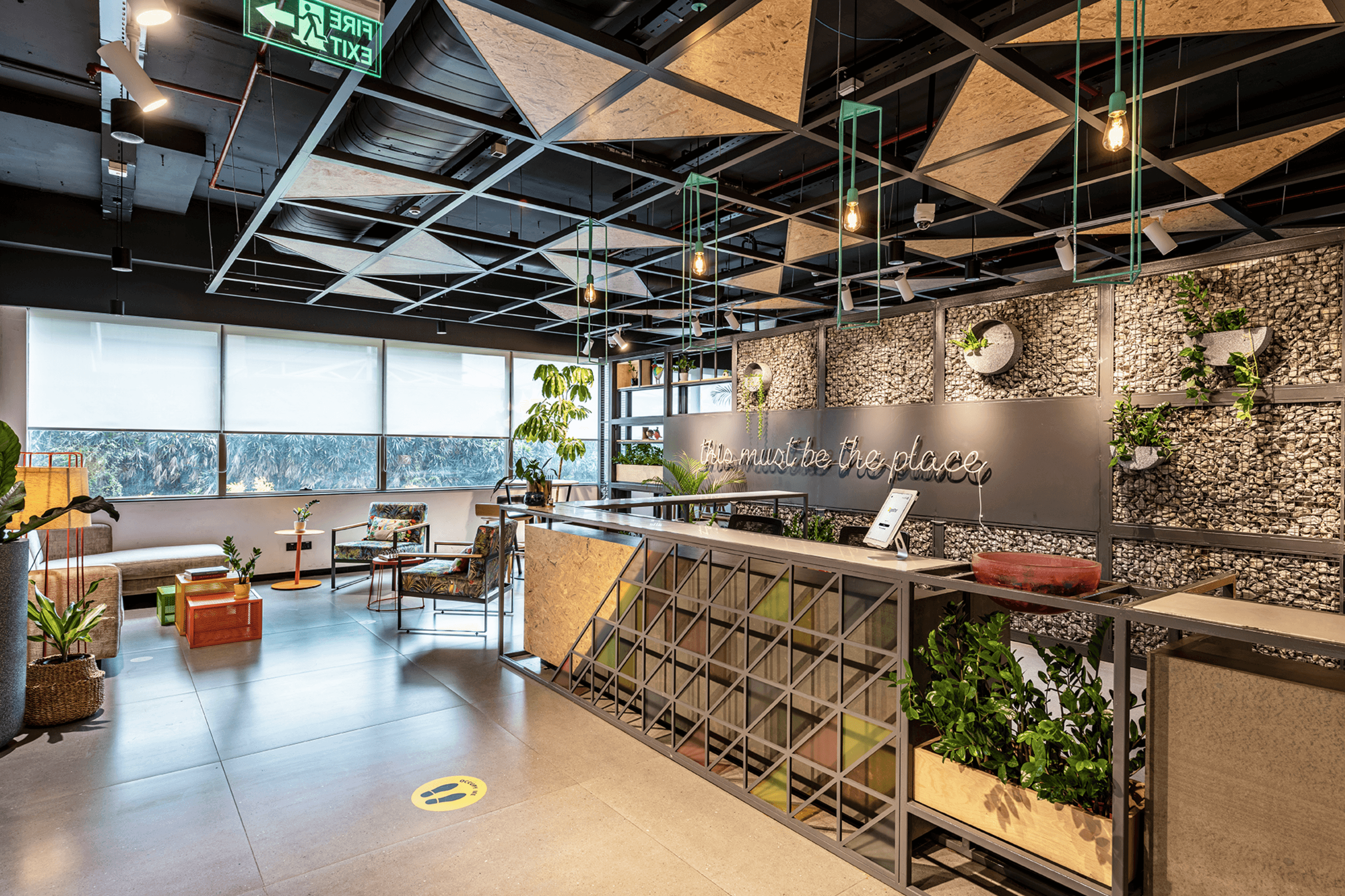
The GCC workplace of 2026 is not simply a place to accommodate employees.
It is becoming an important part of the company's talent strategy, technology strategy, culture, and growth strategy.
Here are 10 workplace trends shaping GCCs in India in 2026.
1. GCC Offices Are Becoming Talent Infrastructure
The biggest change is the role of the workplace itself.
As GCCs take on more sophisticated functions, they are competing for specialised talent in areas such as AI, cloud, cybersecurity, data science, product engineering and advanced technology.
Talent availability has become a significant constraint. Recent GCC research highlights growing demand for advanced skills and increasing difficulty in hiring specialised professionals.
That makes the workplace part of the talent proposition.
Employees increasingly expect offices to provide:
Comfortable work environments
High-quality technology
Collaboration spaces
Wellness facilities
Social spaces
Flexible work settings
Access to natural light
Strong workplace design
The office has to answer a simple question:
Why should someone want to work here?
For GCCs, that question is becoming as important as:
Where should we locate?
2. From Cost Centre to Innovation Centre
The traditional GCC was often measured by headcount and cost efficiency.
That model is changing.
Modern GCCs are increasingly involved in:
Product development
Artificial intelligence
R&D
Global engineering
Data and analytics
Digital transformation
Intellectual property creation
Global decision-making
Research from Zinnov and other industry observers points to a continuing shift from execution-focused centres towards GCCs with greater enterprise ownership and strategic responsibility.
The workplace needs to reflect that change.
An innovation-led GCC cannot operate effectively from a workplace designed purely around rows of desks.
It needs environments that encourage:
Focus + collaboration + experimentation + knowledge sharing.
3. Flexible Workspaces Are Becoming Part of Enterprise Real Estate Strategy
Flexible workspace was once considered primarily an option for startups, freelancers and small businesses.
That perception has changed.
In H1 2026, flexible workspace operators accounted for nearly 20% of India's overall office leasing activity, while GCCs represented 44% of flex seat leasing.
This indicates a fundamental shift.
Enterprises are increasingly using flexible and managed workplaces as part of their broader real estate strategy.
Why?
Because businesses want:
Faster market entry
Lower upfront infrastructure requirements
Scalability
Operational flexibility
Customised workplaces
Access to managed infrastructure
The office is increasingly being treated as a service and capability, rather than only as a fixed real estate asset.
4. The Rise of the Managed Office
One of the strongest developments within flexible workspace is the growth of managed offices.
A managed office combines elements of conventional corporate offices and flexible workspace.
Companies can get a dedicated workplace designed around their requirements while outsourcing much of the operational complexity.
This can include:
Workplace design
Furniture
IT infrastructure
Facilities management
Housekeeping
Security
Reception
Utilities
Meeting spaces
Employee experience
For a GCC, this can provide an alternative to building and managing every component independently.
The important shift is:
Customised workplace without the full operational burden of traditional office development.
5. Workplace Design Is Becoming More Human-Centred
The modern GCC workplace is moving away from purely desk-centric planning.
Instead, offices are being designed around different modes of work.
Employees may spend part of the day:
Working independently
Joining video calls
Collaborating with colleagues
Meeting clients
Brainstorming
Learning
Taking breaks
Socialising
The workplace therefore needs multiple environments.
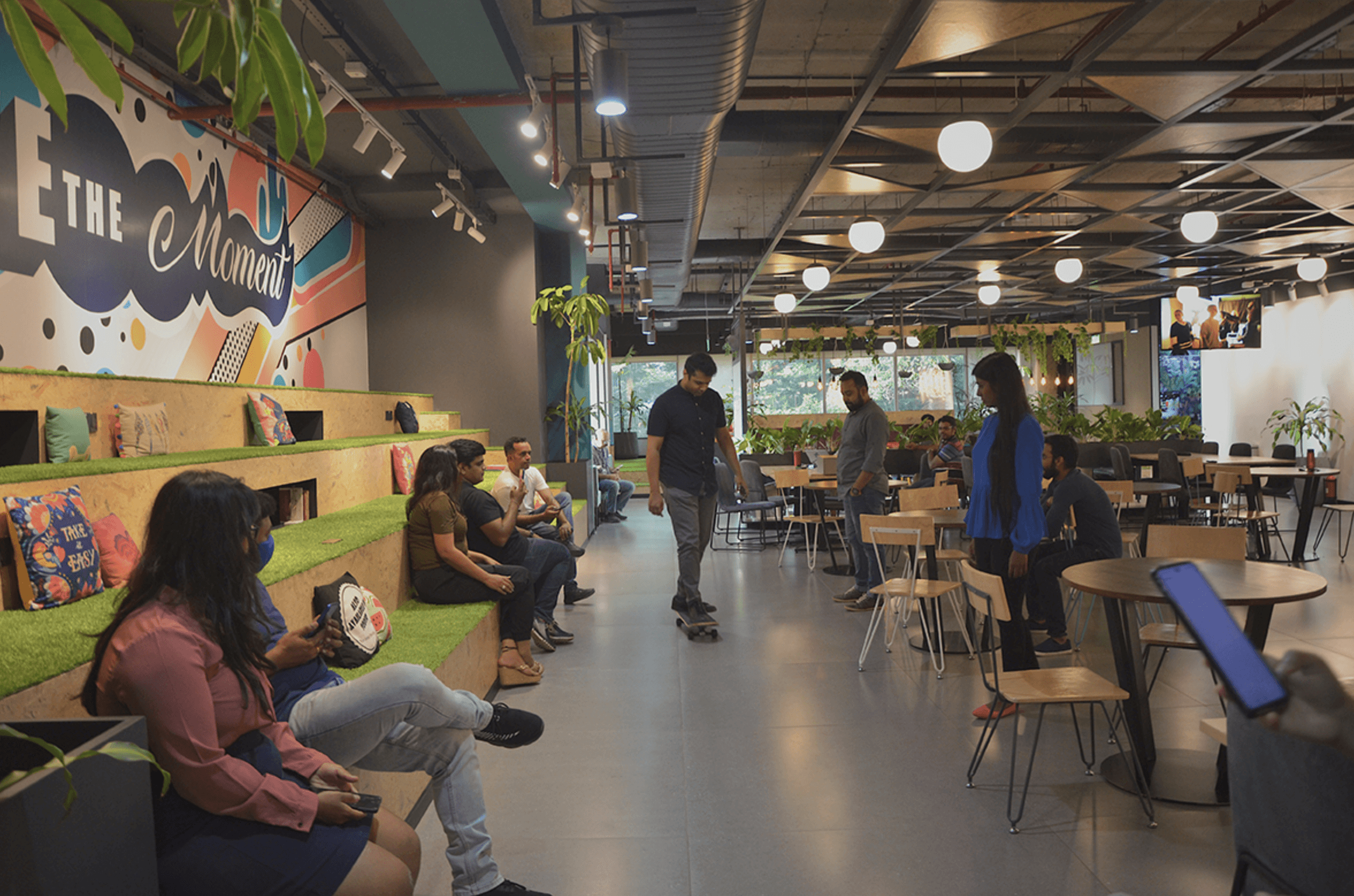
A well-designed GCC workplace may include:
Focus Spaces
For uninterrupted work.
Collaboration Areas
For team discussions and brainstorming.
Meeting Rooms
For formal and virtual meetings.
Informal Spaces
For spontaneous conversations.
Wellness Areas
For breaks and wellbeing.
Social Spaces
For community and connection.
The objective is not to create more spaces.
It is to create the right spaces for the way people actually work.
6. Experience Is Replacing the "Amenities Checklist"
For years, workplace discussions focused heavily on amenities.
Coffee.
Games.
Lounges.
Gyms.
Pantries.
Recreation.
But the conversation is evolving.
Companies are increasingly asking whether these elements actually improve the employee experience.
This is part of what JLL describes as the shift towards more experiential, human-centric GCC workplaces, where wellness, inclusive design and sustainability are becoming increasingly important to talent attraction and retention.
The question is no longer:
"What amenities do you have?"
It is:
"What experience does your workplace create?"
That is a much more meaningful measure.
7. Technology Is Becoming Invisible Infrastructure
Technology is changing the workplace, but the best workplace technology is often the technology employees barely notice.
Modern GCC workplaces increasingly require:
Reliable connectivity
Smart meeting rooms
Secure networks
Access control
Workplace booking systems
Digital visitor management
IT support
Power resilience
Data-enabled workplace management
Technology is also becoming the layer connecting workplace operations.
Modern workplaces are moving towards more integrated environments where real estate, facilities, workplace experience and technology work together rather than operating as separate systems.
The goal is simple:
Technology should make the workplace easier to use, not harder.
8. Sustainability Is Becoming a Workplace Requirement
Sustainability is moving from a corporate reporting requirement to a workplace consideration.
GCCs increasingly need to consider:
Energy efficiency
Green buildings
Sustainable materials
Waste management
Water efficiency
Natural light
Indoor environmental quality
Employee wellbeing
Sustainability also connects directly to talent.
Employees increasingly want to work for organisations whose physical environments reflect their values.
JLL's 2026 GCC research highlights the growing importance of ESG, wellness and sustainable workplace design in attracting and retaining talent.
For GCCs, a sustainable workplace can therefore support both ESG objectives and employee experience.
9. Bengaluru and Hyderabad Continue to Lead, But GCCs Are Expanding Their Footprint
Bengaluru and Hyderabad remain two of India's most important GCC markets.
Colliers reported that the two cities together accounted for more than 60% of GCC space uptake since 2021, with Bengaluru's Outer Ring Road and Hyderabad's Secondary Business District emerging as particularly important GCC locations.
At the same time, GCC expansion is becoming more distributed.
Emerging Tier-II and Tier-III locations are gaining attention as companies explore broader talent pools and "hub-plus-one" strategies.
This could create a more distributed Indian GCC ecosystem:
Primary Hub + Secondary Hub + Emerging Talent Location
The implication for workplace providers is significant.
They need to support companies not just in one building, but potentially across multiple cities and workplace formats.
10. Flexibility Is Moving From "Nice to Have" to Strategic Requirement
The final trend brings many of the others together.
GCCs need flexibility because their businesses are changing quickly.
Hiring plans change.
Technology changes.
Teams change.
Work patterns change.
Business functions move.
New projects appear.
A workplace designed for a fixed workforce and fixed working pattern can quickly become inefficient.
That is why flexibility is increasingly being built into corporate real estate strategies.
It can mean:
Flexible contracts
Expandable capacity
Modular design
Multi-location access
Reconfigurable spaces
Hybrid work infrastructure
Managed operations
The objective is not maximum flexibility for its own sake.
It is the ability to respond quickly when the business changes.
What These 10 Trends Tell Us
These trends point towards one larger transformation.
The GCC workplace is moving:
From | To |
Cost centre | Strategic capability |
Office | Workplace ecosystem |
Fixed footprint | Scalable infrastructure |
Desk-centric | Activity-based |
Amenities | Experience |
Manual operations | Technology-enabled operations |
Generic workplace | Brand-led workplace |
Long-term fixed commitment | Greater flexibility |
Real estate provider | Workplace partner |
Employee attendance | Employee experience |
This is perhaps the biggest change in India's GCC workplace story.
The question is no longer simply:
"How much office space do we need?"
It is:
"What kind of workplace will help our GCC perform at its best?"
What This Means for Global Companies Setting Up GCCs in India
For companies planning a new GCC, these trends should influence the workplace strategy from the beginning.
Instead of treating the office as a final step after the business plan is complete, companies should consider workplace strategy alongside:
Talent strategy
Location strategy
Technology strategy
Business growth
Employer branding
ESG objectives
The workplace should be designed around the organisation's future, not just its current headcount.
A company starting with 100 employees may eventually have 500.
A technology team may evolve into a global product organisation.
A support function may become a global centre of excellence.
The workplace needs to be capable of evolving alongside the business.
What Should GCC Leaders Look for in a Workplace Partner?
As the workplace becomes more strategic, selecting the right workplace partner becomes increasingly important.
GCC leaders should evaluate:
Location
Can the workplace attract and retain the right talent?
Design
Does the space support different ways of working?
Technology
Can it meet enterprise requirements?
Security
Can it accommodate the company's privacy and access requirements?
Scalability
Can the workplace grow with the business?
Experience
Does it create an environment employees want to use?
Sustainability
Does it support the organisation's ESG goals?
Operations
Can the workplace partner manage day-to-day complexity?
Brand
Can the workplace reflect the company's identity?
Flexibility
Can the workplace adapt when business requirements change?
These criteria are becoming more important as GCCs take on greater strategic responsibility.
The Future of GCC Workplaces in India
The next generation of GCC offices will not be defined simply by how many people they can accommodate.
They will be defined by what those people can accomplish inside them.
The workplace will need to support:
Innovation.
Talent.
Technology.
Collaboration.
Wellbeing.
Sustainability.
Growth.
And that requires a different approach to workplace strategy.
Managed offices and flexible workplace solutions are increasingly becoming part of that conversation, particularly as companies look for speed, scalability and operational simplicity. Current 2026 market data shows that enterprises and GCCs are already driving significant demand for these models.
How 2gethr Is Responding to the New GCC Workplace
At 2gethr, the workplace is viewed as more than a collection of desks.
The focus is on bringing together design, technology, flexibility, managed operations and employee experience to create workplaces that support the way modern businesses operate.
For GCCs and global companies expanding in India, this approach is particularly relevant as workplace expectations continue to evolve.
Whether a company is establishing its first India office, scaling an existing GCC, or expanding across Bengaluru and Hyderabad, the workplace needs to be capable of supporting both immediate requirements and long-term growth.
The future of the GCC workplace is not about choosing between a traditional office and a flexible office.
It is about building the right workplace infrastructure for the business.
Final Thought
India's GCC story is moving into its next chapter.
The winners will not simply be the companies that build the biggest centres.
They will be the ones that build the right capabilities, attract the right talent, create the right environment, and give their teams the infrastructure to innovate.
And that makes the workplace more important than ever.
The future of GCCs in India will not be built only inside offices.
It will be built by the workplaces that help people do their best work.
2gethr — Work Better. Together.
Explore More Blogs

Read More

" height="30px" id="U51AI_5x8" width="28px"/></svg>)
" height="27.99998658825674px" id="mac9xsCsD" width="23.999615734187273px"/></svg>)
" height="32px" id="uZPMLbUqp" width="42px"/></svg>)
" height="30px" id="Ji8lZ7551" width="29px"/></svg>)