
Best Managed Office Spaces in India for GCCs and Global Companies: A Complete Guide
India has become one of the world's most important destinations for Global Capability Centres (GCCs), technology companies, startups, and multinational businesses expanding their operations.
But setting up an office in India is no longer simply about finding a building, signing a lease, and fitting out a floor.
For global companies, the workplace has become a strategic decision.
The right office needs to support talent acquisition, employee experience, brand perception, technology, security, sustainability, collaboration, and business growth, while reducing the time and operational complexity involved in setting up and managing a workplace.
This is where managed office spaces are becoming increasingly relevant.
For companies entering Bangalore, Hyderabad, or other major Indian business hubs, a managed office can provide a faster and more flexible alternative to building a conventional office from scratch.
But with multiple workspace providers in the market, how do you identify the best managed office for your company?
This guide covers the key factors global companies and GCCs should consider when selecting a managed office space in India.
What Is a Managed Office?
A managed office is a fully designed and operated workplace provided by a workspace partner.
Instead of managing every aspect of an office independently, companies can work with a managed office provider that takes care of areas such as:
Workplace design and fit-out
Furniture and ergonomics
IT and connectivity infrastructure
Meeting and collaboration spaces
Reception and front-office services
Housekeeping and facility management
Security
Utilities and maintenance
Employee amenities
Community and workplace experience
Workplace technology
Expansion and operational support
The company gets a workplace designed around its requirements without having to build and operate the entire infrastructure independently.
For GCCs and global businesses, this model can significantly reduce the operational burden associated with entering a new market.
Why Are GCCs Choosing Managed Offices in India?
India's GCC ecosystem has evolved significantly.
GCCs are no longer viewed only as cost centres or back-office operations. Many now house engineering, product development, artificial intelligence, data science, finance, cybersecurity, design, innovation, and global leadership functions.
That evolution has changed what companies expect from their workplaces.
A GCC office needs to attract highly skilled talent and provide an environment that reflects the company's global culture.
This means the workplace needs to offer more than desks.
It needs to provide:
Flexibility + technology + design + employee experience + scalability + operational reliability.
A managed office can bring these elements together under one workplace partner.
What Makes a Good Managed Office for a Global Company?
Not every flexible workspace is suitable for an enterprise or GCC.
When evaluating managed office providers, companies should look beyond the number of seats and the appearance of the workspace.
Here are the key factors to consider.
1. Location and Connectivity
Location remains one of the most important factors in workplace strategy.
In Bangalore, areas such as the Outer Ring Road, Bellandur, HSR Layout, Residency Road, and other established business districts are attractive because they provide access to a large talent pool and established business infrastructure.
In Hyderabad, locations around major commercial and technology corridors can provide similar advantages for companies establishing their first India office or expanding an existing operation.
The right location should consider:
Employee commute
Public transport
Airport connectivity
Access to residential areas
Nearby hotels
Restaurants and retail
Business ecosystem
Availability of talent
For GCCs, location should ultimately be evaluated as a talent strategy, not simply as a real-estate decision.
2. Workplace Design
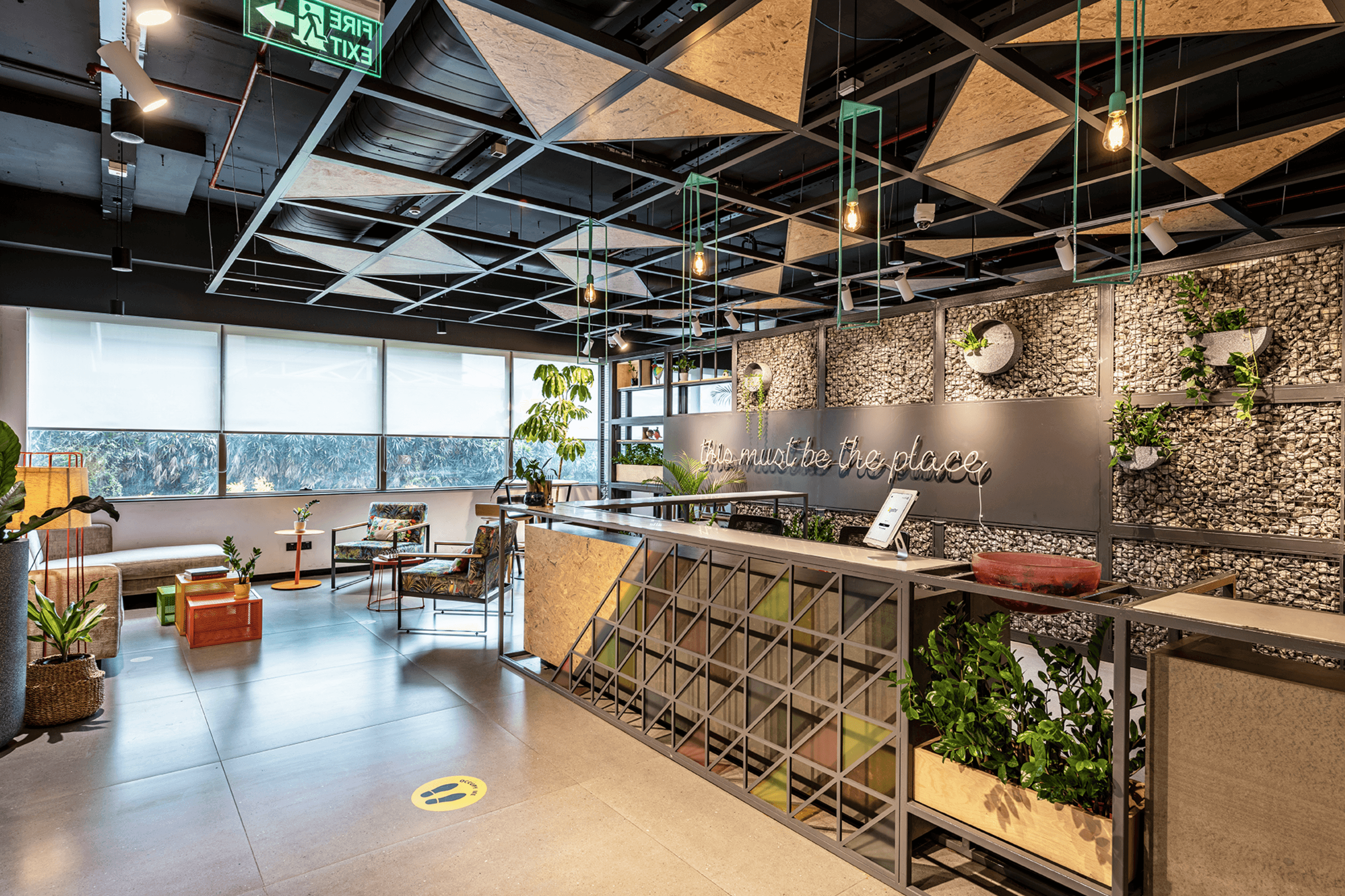
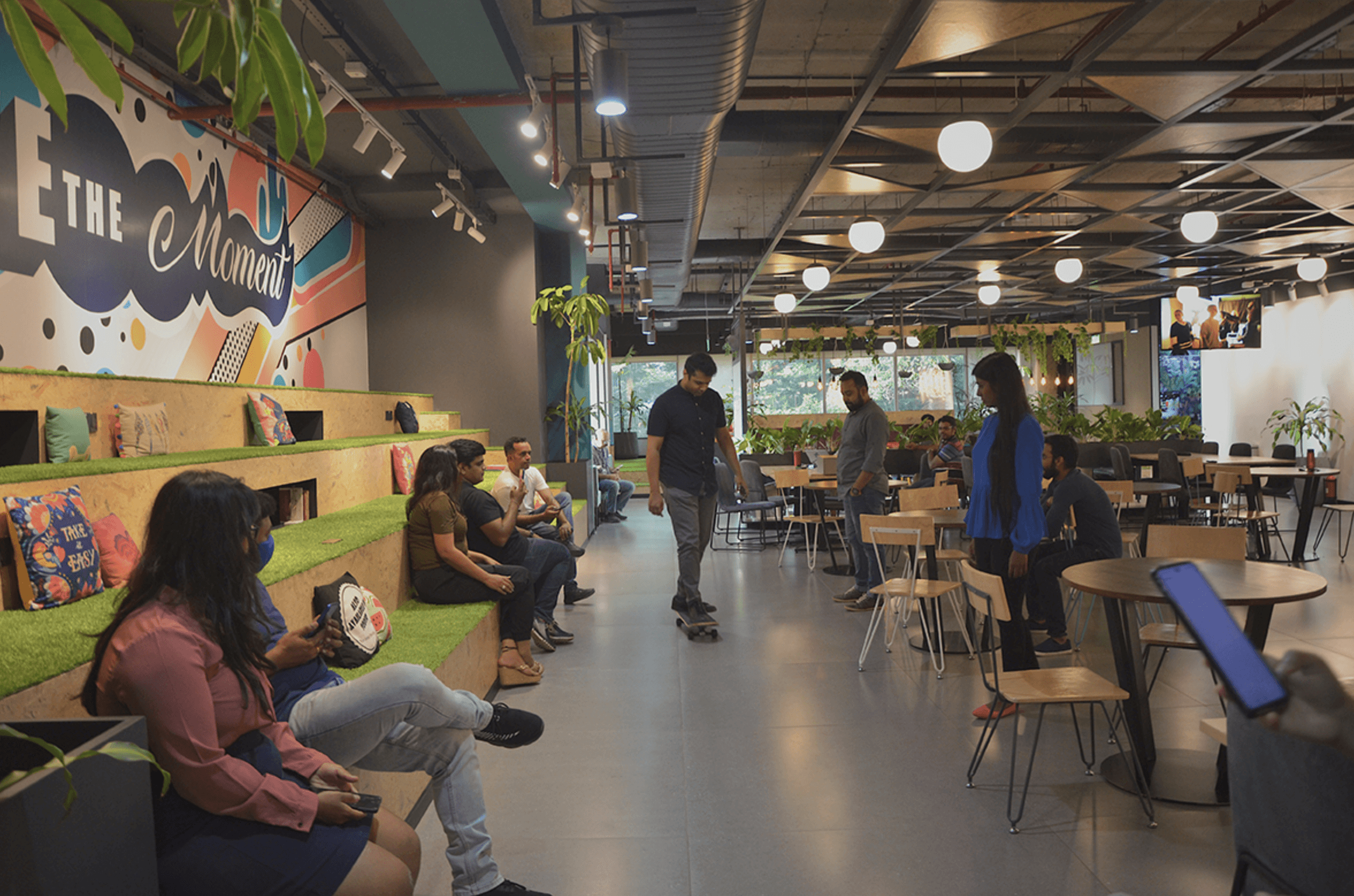
A global company should not have to compromise its workplace experience simply because it chooses a managed office.
Good workplace design should support different ways of working.
That means providing a balance of:
Focus areas
Collaboration zones
Meeting rooms
Boardrooms
Informal meeting spaces
Breakout areas
Cafeteria and pantry spaces
Wellness areas
Social spaces
Leadership offices
Training rooms
Multipurpose spaces
The workplace should also consider lighting, acoustics, ergonomics, circulation, material selection, and employee comfort.
For companies competing for highly skilled talent, these details can influence how employees experience the organisation.
3. Technology Infrastructure
Technology infrastructure is critical for GCCs and global companies.
A managed office should be capable of supporting enterprise-grade technology requirements, including:
High-speed internet
Redundant connectivity
Secure network infrastructure
Video conferencing
Access control
Meeting room technology
IT support
Power backup
Digital workplace systems
Companies should also understand how the provider handles network segregation, security requirements, data protection, and access management.
For technology-driven organisations, the office infrastructure should enable work rather than create additional operational dependencies.
4. Security and Privacy
Security becomes particularly important when global companies operate from a shared or managed workplace environment.
Companies should evaluate:
Physical access control
Visitor management
CCTV coverage
Secure server and IT areas
Network security
Data privacy processes
Restricted-access zones
Employee access management
A strong managed office provider should be able to accommodate different security requirements depending on the nature of the business.
For a GCC handling sensitive intellectual property, security should be evaluated before commercial terms are finalised.
5. Scalability
One of the biggest advantages of a managed office model is the ability to scale.
A company may initially require 50 seats and eventually grow to 200, 500, or more employees.
The workplace partner should be able to support that growth.
Before signing an agreement, companies should ask:
Can we expand within the same building?
Can we add additional floors?
Can teams be relocated without disrupting operations?
Can the workplace be reconfigured as our organisation changes?
For GCCs, this is particularly important because hiring plans can change rapidly during the first few years of operations.
6. Speed to Market
Traditional office setup can involve multiple stakeholders, including landlords, architects, contractors, interior designers, IT vendors, facility management companies, and procurement teams.
This can make the setup process lengthy.
A managed office can consolidate many of these requirements under one workplace partner.
For companies entering India, speed can have significant strategic value.
The faster an organisation can establish a functional workplace, the faster it can recruit, onboard teams, and begin operations.
However, companies should not evaluate speed alone.
The objective should be:
Fast without compromising quality, security, design, or operational readiness.
7. Employee Experience
A workplace is ultimately used by people.
This makes employee experience one of the most important factors when selecting a managed office.
Companies should look at the complete employee journey:
Arrival → Work → Meetings → Collaboration → Breaks → Wellness → Social interaction → Departure
Amenities such as cafeterias, lounges, recreation areas, wellness facilities, community events, and breakout spaces can contribute to a more engaging workplace experience.
The important question is not simply:
"What amenities do you have?"
It is:
"How do these amenities improve the way people work?"
That distinction separates a well-designed workplace from a checklist of facilities.
8. Workplace Management
The biggest benefit of a managed office should be management.
Companies should understand exactly what the provider manages after the workplace becomes operational.
This may include:
Facility management
Housekeeping
Maintenance
Utilities
Security
Reception
IT support
Meeting room management
Pantry services
Employee experience
Community management
A good managed office partner should allow the company's internal team to focus on the business rather than day-to-day workplace administration.
Bangalore: Why It Remains a Key Market for Managed Offices
Bangalore continues to be one of India's most important markets for technology companies, startups, multinational corporations, and GCCs.
The city has a deep technology talent pool and established business ecosystems across multiple commercial districts.
For companies setting up or expanding a GCC, the decision is increasingly about selecting the right combination of:
Location + talent + workplace quality + scalability + operational efficiency.
Managed offices can provide an attractive option for companies that want a premium workplace without taking on the entire responsibility of developing and operating a conventional office.
Areas such as ORR, Bellandur, HSR Layout, and central Bangalore continue to be relevant considerations depending on the company's workforce and business requirements.
Hyderabad: A Growing Destination for GCCs
Hyderabad has emerged as another major destination for technology companies and GCCs.
The city offers a strong technology ecosystem, expanding commercial infrastructure, and access to a large talent pool.
For companies entering Hyderabad, managed offices can provide a way to establish a professional workplace while maintaining flexibility during the initial stages of expansion.
This is particularly relevant for global companies that want to validate their India operations before committing to a large long-term real-estate footprint.
How to Choose the Best Managed Office in Bangalore or Hyderabad
There is no universal "best" managed office.
The best workplace is the one that fits the company's operating model.
Before selecting a provider, companies should evaluate the following:
Business Requirements
Number of employees
Expected growth
Required office configuration
Leadership requirements
Collaboration needs
Meeting room requirements
Location
Employee commute
Talent availability
Connectivity
Business ecosystem
Workplace
Design quality
Ergonomics
Lighting
Acoustics
Meeting spaces
Collaboration areas
Employee amenities
Technology
Internet
Network infrastructure
IT support
Meeting technology
Power backup
Security
Access control
Data security
Visitor management
Restricted areas
Commercials
Pricing
Deposit
Contract flexibility
Expansion terms
Exit terms
Additional service costs
Operations
Facility management
Housekeeping
Maintenance
Community management
Service-level commitments
Where Does 2gethr Fit Into the Managed Office Market?
2gethr is a Bangalore-based managed office and workspace company focused on creating workplaces around the way people and businesses actually work.
Its approach combines workplace design, managed office infrastructure, employee experience, and flexibility.
For companies looking for managed office solutions in Bangalore, 2gethr offers workspaces across established business locations, including areas such as the Outer Ring Road, HSR Layout, Residency Road, and other commercial districts.
The company has also expanded its presence beyond Bangalore, including Hyderabad, as demand for high-quality managed workplaces continues to grow.
For GCCs and global companies, the proposition is particularly relevant where the requirement is not simply for a collection of desks, but for a workplace that can support the company's culture, operational requirements, talent strategy, and growth plans.
The principle is simple:
A managed office should manage more than real estate. It should help businesses work better.
What Should Companies Ask Before Signing a Managed Office Agreement?
Before making a decision, companies should ask their shortlisted providers:
How quickly can the office become operational?
Can the space be customised to our brand and workplace requirements?
How easily can we expand?
What happens if our headcount reduces?
What technology infrastructure is included?
How are security and network requirements handled?
What facility management services are included?
What are the additional charges beyond the seat price?
What are the SLA commitments?
Can the provider support multiple locations across India?
Can the workplace support GCC-specific requirements?
Who owns the workplace experience after handover?
These questions can help companies distinguish between a basic flexible workspace and a genuinely managed workplace solution.
The Future of Managed Offices in India
The Indian office market is moving towards greater flexibility.
Companies increasingly want the ability to combine long-term workplace strategy with shorter implementation cycles and adaptable real-estate models.
At the same time, employees expect better workplaces.
They want offices that provide focus, collaboration, community, comfort, technology, and a sense of belonging.
For GCCs, the workplace is becoming even more strategic because companies are competing globally for specialised talent.
This means the future of managed offices will not be defined simply by the number of desks available.
It will be defined by the quality of the workplace ecosystem.
The winning providers will be those that can combine:
Real estate + design + technology + operations + flexibility + employee experience.
Final Takeaway
Choosing the best managed office in Bangalore, Hyderabad, or anywhere in India should not begin with the question:
"How much does a seat cost?"
It should begin with:
"What does our business need from its workplace?"
For a startup, the priority may be flexibility.
For an established enterprise, it may be operational efficiency.
For a GCC, it could be a combination of scalability, security, technology, talent attraction, employee experience, and global workplace standards.
The right managed office partner should be able to address all of these requirements while allowing the company to focus on what it does best.
As India's GCC and global business ecosystem continues to expand, managed offices are becoming more than an alternative to traditional leasing.
They are becoming a strategic workplace model for companies that want to enter faster, scale smarter, and create better workplaces for their people.
Looking for a managed office in Bangalore or Hyderabad? Explore 2gethr's managed workspace solutions and find a workplace designed around your business.

Read More

" height="30px" id="U51AI_5x8" width="28px"/></svg>)
" height="27.99998658825674px" id="mac9xsCsD" width="23.999615734187273px"/></svg>)
" height="32px" id="uZPMLbUqp" width="42px"/></svg>)
" height="30px" id="Ji8lZ7551" width="29px"/></svg>)