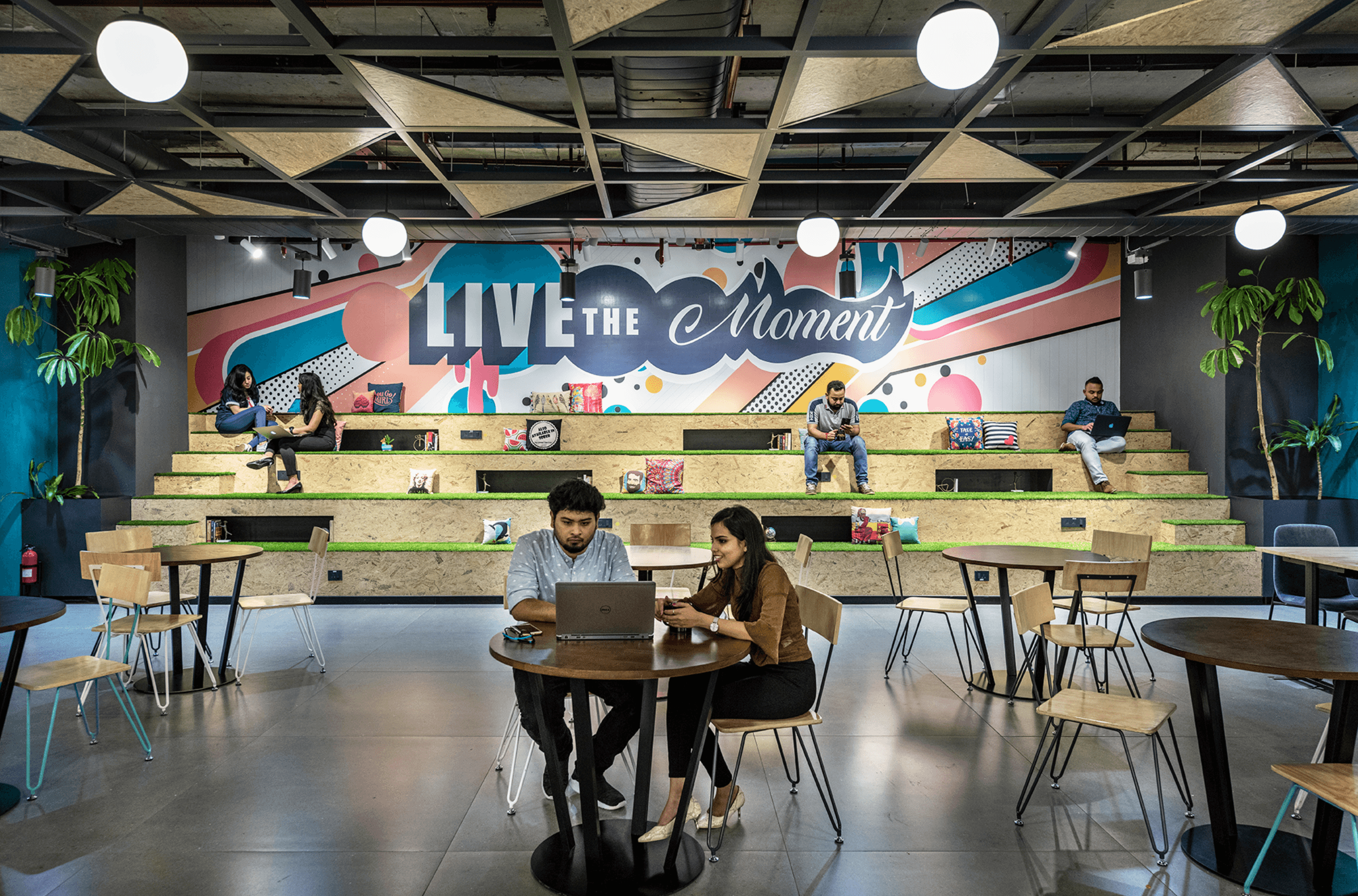
Why Do Hybrid Workplaces Need Company Culture?
“Hey, you’re not audible.”
“I think there is some connectivity issue.”
Ring any bells?
There’s no doubt that the pandemic has completely changed the face of the traditional work model across the globe. But now that we’ve gotten somewhat used to the pandemic & as organizations have started to open up little by little, we’re well acquainted with the idea of a hybrid workplace⸺a move from fixed work to a flexible model which provides the best of both the office world & the remote environment. Research shows that a majority of workers want flexible work arrangements even after the pandemic. Adapting to this working model might seem straightforward from outside, but it comes with other issues which concern the leaders. As employers figure how to do hybridity right, they face an additional challenge of maintaining the company culture.
What's in a company culture?
In layman’s words, company culture can be described as the shared ethos of any organization. But let’s understand it a little more deeply. The attitudes & behaviors, the values they hold & the decisions they make are what make a company culture. Basically, it’s the way people feel about the work they do, where they see the company going in the future & what they are doing to get it there. A survey conducted by Glassdoor in 2019 states that 77% of adults would consider a company’s culture before applying to an open position & 56% prioritize company culture over salary.
To understand what company culture is, let us understand what company culture is not & clear the misconceptions associated with it.
Your core values: Until you put your core values into action, they are just words on a piece of paper. In fact, if core values are not adhered to, they can negatively impact the culture.
Perks & Recreations (not the series): Your perks & benefits like the coffee machine in the corner & the ping-pong table definitely have a special place in your heart but these are not a substitute for strong company culture.
The measuring yardstick: Hiring employees for cultural fit has been an important factor over the past few years, but some companies are shifting away from this trend. Nowadays, companies not only hire people who align with their culture but also those who can bring their own unique traits to the table.
How does a company culture work?
One example of company culture can be seen at Netflix. Netflix in its company culture document enclosed their philosophy of “people over process”. They said judgement, communication, curiosity, courage, passion & other qualities are their company values. They expect their employees to uphold these values at all costs which will result in a successful & creative organization. A company’s culture may be cultivated over time, or simply result from the accumulation of decisions they’ve made so far. The importance of company culture is such that it impacts every facet of your company’s business. While some companies have a team based culture which requires their employees to participate on all levels, there are also businesses which have a more formal culture where hierarchical management is valued. In such a traditional setting, there might be lesser opportunities to advance without going through a formal promotion or transfer process. Whereas at a casual workplace employees have the opportunity to take up additional projects & new roles if time permits.
Maintaining culture at a hybrid workplace
Now you might ponder upon the question “Is culture really necessary if employees are not always in the office?”
The answer is YES.
Culture is essential for a company’s success & a research by Kotter shows that organizations see payoffs in revenue growth, stock price & net income when cultures are more effective. Now after more than a year of proving that productivity can be maintained even in a remote environment, it is time to ensure the same in a hybrid model of working. Prior to the pandemic, a lot of culture centered around getting work done. But in the last one year, companies have started to focus more on their employees which is a step towards re-modelling the traditional work culture.
Proximity is an essential determinant of relationships. We tend to be closest to the people we interact frequently with. When people feel connected & intertwined in each other’s success, it also ensures the success of the organization as a whole. Similarly, when people in an office experience a sense of common purpose, it becomes a key to enhanced performance. But now that people won’t regularly run into each other in those hallways & staircases & have some chit chat, the sense of a common purpose may decline. Thus, leaders & managers need to ensure that the team members & their works are connected to the overall outcome. Equity is another factor which impacts the culture of a workplace. If people don’t have a sense of equity & justice they might not feel motivated. This dynamic is very necessary when nurturing a hybrid model. Those who aren’t in the office may sometimes miss certain goings-on of the company. Thus building a culture in a hybrid model requires more communication so that the results are fair & equitable & everyone is aware of everything that’s going on.
Every individual has their own unique way of seeing & perceiving things. Therefore no successful culture is without conflict. But this difference in opinions is what provides the opportunity to discuss & debate over various POVs. Effective cultures manage to handle their conflicts effectively. With hybrid working, both leaders & team members need to make room for differences of opinion so that in the long run no greater conflict arises & the culture of the company sustains.
A company’s approach to hybrid working should be as unique as the organization itself. It has always been a challenge to strengthen culture & with the new hybrid work model the difficulty may increase by many-folds. Leaders now will need to create, foster & nurture culture when people are working from multiple places. This can be complicated & challenging but with the right focus the company culture will survive & sustain in the long run. It won’t be easy but it will definitely be worth all the effort.
Explore More Blogs

Read More

" height="30px" id="U51AI_5x8" width="28px"/></svg>)
" height="27.99998658825674px" id="mac9xsCsD" width="23.999615734187273px"/></svg>)
" height="32px" id="uZPMLbUqp" width="42px"/></svg>)
" height="30px" id="Ji8lZ7551" width="29px"/></svg>)