
Why the Best Workplaces Help People Work Better
Productivity is often measured in numbers: tasks completed, meetings attended, deadlines met and targets achieved.
But there is another factor that is becoming equally important: how people feel while doing the work.
A productive workplace is not simply a place where people spend eight or nine hours at a desk. It is an environment that helps people focus, collaborate, recharge and perform at their best.
At 2gethr, we believe productivity and wellness are not competing priorities. They are connected.
Productivity Starts With the Right Environment
The traditional idea of productivity often focuses on working longer or doing more. But sustainable productivity is about creating the conditions in which people can do better work.
Research increasingly shows that workplace design can influence factors such as concentration, satisfaction, wellbeing and performance. A 2025 review of workplace layout research identified elements including workstation design, shared spaces, social support and the wider office environment as important considerations for worker health and performance.
This changes the question businesses should be asking.
Instead of:
"How much space do we need?"
The better question is:
"What kind of environment do our people need to do their best work?"
1. Spaces Designed for Different Ways of Working
Not every task requires the same environment.
Deep-focus work requires quiet.
Brainstorming requires collaboration.
Client conversations require privacy.
Team discussions need connection.
And sometimes, people simply need a change of environment.
That is why modern workplaces need more than rows of desks.
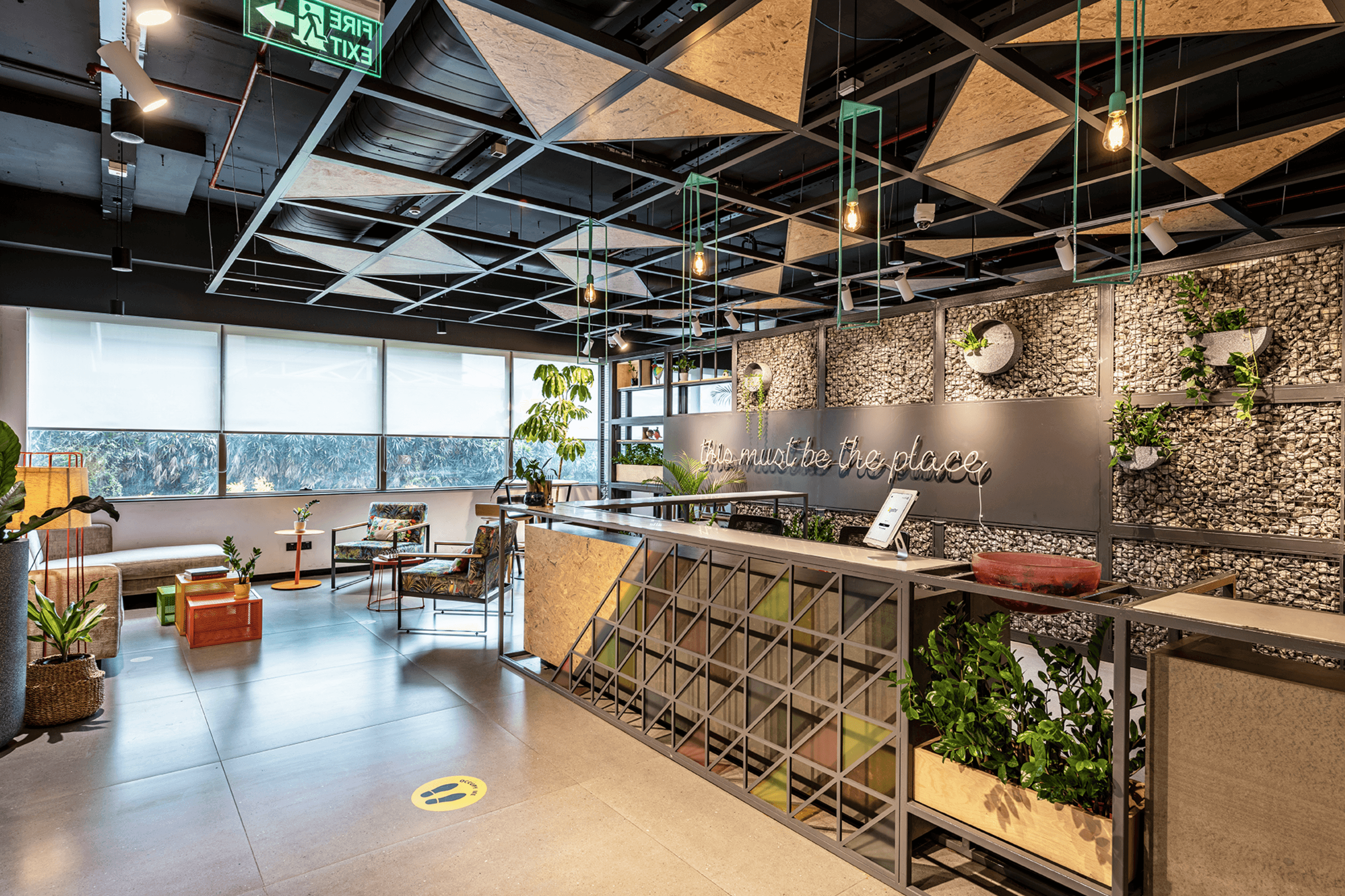
A thoughtfully designed workplace can combine:
Private cabins for focused work
Meeting rooms for collaboration
Open areas for team interaction
Informal spaces for conversations
Breakout zones for quick resets
Cafes and lounges for informal networking
Wellness and recharge areas
Giving people the ability to choose the right environment for the task can make the workplace more responsive to how work actually happens.
2. Wellness Is Part of Productivity
Wellness at work is not limited to gyms, meditation rooms or occasional wellness activities.
It begins with the everyday experience of the workplace.
Natural light.
Comfortable furniture.
Good acoustics.
Air quality.
Ergonomics.
Access to movement.
Spaces for privacy.
Opportunities to connect with people.
These seemingly small details can influence how people experience their working day.
The World Health Organization highlights that healthy working environments can support mental health, retention, work performance and productivity, while excessive workloads, low job control and poor working environments can create risks to mental health.
Wellness, therefore, should not be treated as an add-on.
It should be built into the workplace itself.
3. The Power of Taking a Break
One of the biggest misconceptions about productivity is that being constantly busy means being productive.
It doesn't.
The human brain needs moments to reset. A short walk, a coffee break, a conversation with a colleague or simply stepping away from the screen can create the mental space needed to return with greater clarity.
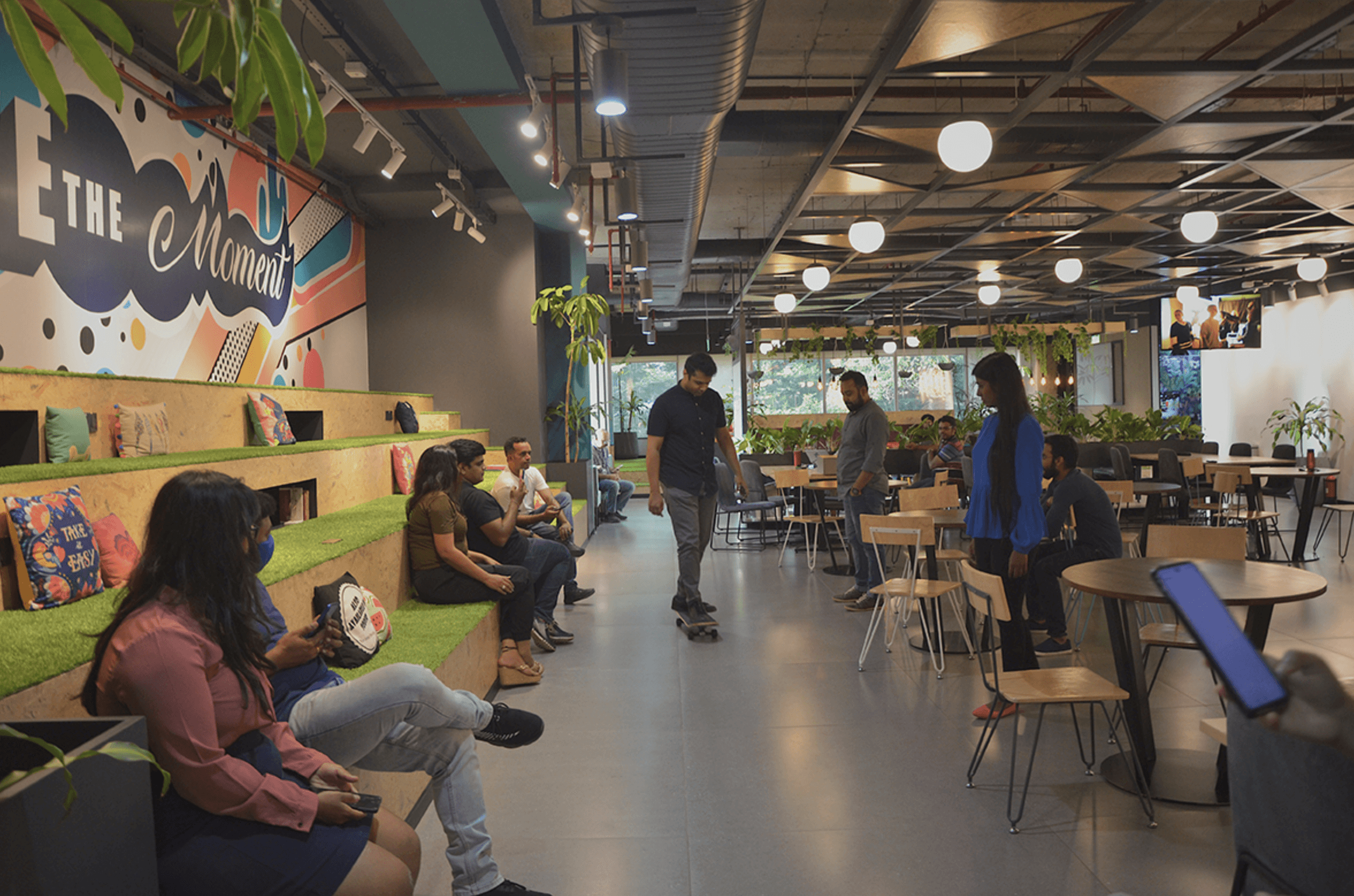
Workplaces that provide comfortable common areas and informal spaces make it easier for employees to take meaningful breaks without completely disconnecting from the work environment.
The objective isn't to encourage people to work less.
It is to help people work sustainably.
4. Movement Matters
Modern work can involve long periods of sitting and screen time.
A workplace can encourage movement through simple design decisions:
Walking routes between different work zones
Accessible staircases
Standing or collaborative areas
Open spaces for informal interaction
Outdoor or terrace areas
Breakout zones away from the primary workstation
Research into active workplace design has found promising evidence that thoughtful design can reduce sitting and increase standing, although the evidence around broader physical activity and productivity remains more limited.
The takeaway is simple: workplace design can create more opportunities for movement without disrupting the working day.
5. Quiet Spaces Are Productivity Infrastructure
Collaboration is important. But constant collaboration can become counterproductive.
Open offices can create distractions, noise and interruptions, particularly when employees need to concentrate. Research comparing different office layouts has found that workplace configurations offering greater zoning and team-specific environments can perform better than completely open layouts on measures including satisfaction, flow and productivity.
This is why privacy and focus zones matter.
A productive office should allow employees to say:
"I need to collaborate."
But it should also allow them to say:
"I need to focus."
Both are legitimate workplace needs.
6. Community Is Part of Wellness
Workplace wellness isn't only physical or individual.
People also need connection.
A strong workplace community can create opportunities for employees to meet people outside their immediate teams, exchange ideas and build relationships.
This is where community-led workplaces can create an additional advantage.
Events, networking sessions, wellness activities, workshops, celebrations and informal interactions can transform an office from a collection of workstations into a place where people feel connected.
And that sense of belonging matters.
The WHO notes that decent work can provide positive relationships, inclusion, purpose and a structured routine, all of which can contribute positively to mental health.
7. Technology Should Reduce Friction
A modern workplace should also make everyday work easier.
From meeting-room booking and visitor management to workspace access, connectivity and workplace services, technology should remove unnecessary friction.
The objective is simple:
Less time managing the workplace. More time doing meaningful work.
For growing companies, this becomes particularly important. As teams scale, the workplace needs to remain flexible enough to support changing headcounts, working styles and business requirements.
The Future of Productivity Is Human
The next generation of workplaces will not be defined only by square footage, furniture or technology.
They will be defined by how effectively they support people.
The best workplaces will help employees:
Focus when they need to focus.
Collaborate when they need to collaborate.
Move when they need to move.
Recharge when they need to recharge.
Connect when they need to connect.
Because productivity isn't about squeezing more work out of people.
It is about creating an environment where people can do their best work.
How 2gethr Approaches Productivity & Wellness
At 2gethr, workplace design starts with people.
Our managed workspaces bring together thoughtfully designed work zones, meeting spaces, collaborative areas, amenities and community experiences to create workplaces that support both business performance and employee experience.
Because when the workplace works better for people, businesses work better too.
2gethr. Designed for better work. Built for better experiences.
Sources
World Health Organization, Mental Health at Work.
World Health Organization, Guidelines on Mental Health at Work.
Promoting good mental health in the workplace, WHO Europe.
Promoting good health of workers through office layout: A scoping literature review, Building and Environment, 2025.
Explore More Blogs
Read More

" height="30px" id="U51AI_5x8" width="28px"/></svg>)
" height="27.99998658825674px" id="mac9xsCsD" width="23.999615734187273px"/></svg>)
" height="32px" id="uZPMLbUqp" width="42px"/></svg>)
" height="30px" id="Ji8lZ7551" width="29px"/></svg>)